Product ownership + platform modernization
Brand Activation Manager
Internal shorthand / BAM
Rebuilding a fragile operations platform into a maintainable product system.
- Engagement
- End-to-end product ownership
- Platform
- Campaign operations
- Scope
- UX / architecture / full stack
- Stack
- Next.js / Django / MySQL / Redis
Thirty-second read
Problem
Slow, fragile legacy workflows constrained the operation.
Owned
Product, UX, architecture, full stack, and integration.
Key decision
Campaign operations
Proof
Responsive data-heavy workflows and an extensible foundation.
Full stack
Ownership
Product through integration
Selective
Data loading
Less work on critical paths
Extensible
Architecture
Patterns built for handoff
01 / Context
Problem / opportunity
A tightly coupled legacy application had hardcoded rules, incomplete workflows, and performance problems that made every change riskier.
The opportunity was to redesign the product around the operation—not simply replace old code.
End-to-end product ownership—from identifying weaknesses in the legacy experience and redesigning core workflows to architecting and building the full-stack platform. The result is a cleaner, maintainable system designed so other engineers can extend it confidently.
02 / Ownership
What I owned
- 01Diagnosed weaknesses across the product and underlying system.
- 02Redesigned core workflows around real campaign operations.
- 03Architected, built, and integrated the full-stack platform.
- 04Established patterns other engineers could extend confidently.
03 / System
System / product architecture
Legacy
- Hardcoded rules
- Tightly coupled
- Fragile workflows
- Slow data paths
Rebuilt platform
- Clear workflows
- Service boundaries
- Extensible patterns
- Selective loading
- 01
Product workflows
- 02
Next.js interface
- 03
Django services
- 04
MySQL + Redis/RQ
- 05
S3 + integrations
A modern product surface backed by explicit services, queues, storage, and instrumentation.
Next.js 14, React 18, and TypeScript for the product interface.
Django 4.2 and DRF for application and domain services; MySQL for system records.
Redis and RQ for caching and queued work; S3, Mixpanel, and Docker Compose for operations.
Selective loading kept large calculations and high-volume data away from interaction-critical paths.
04 / Evidence
Product evidence
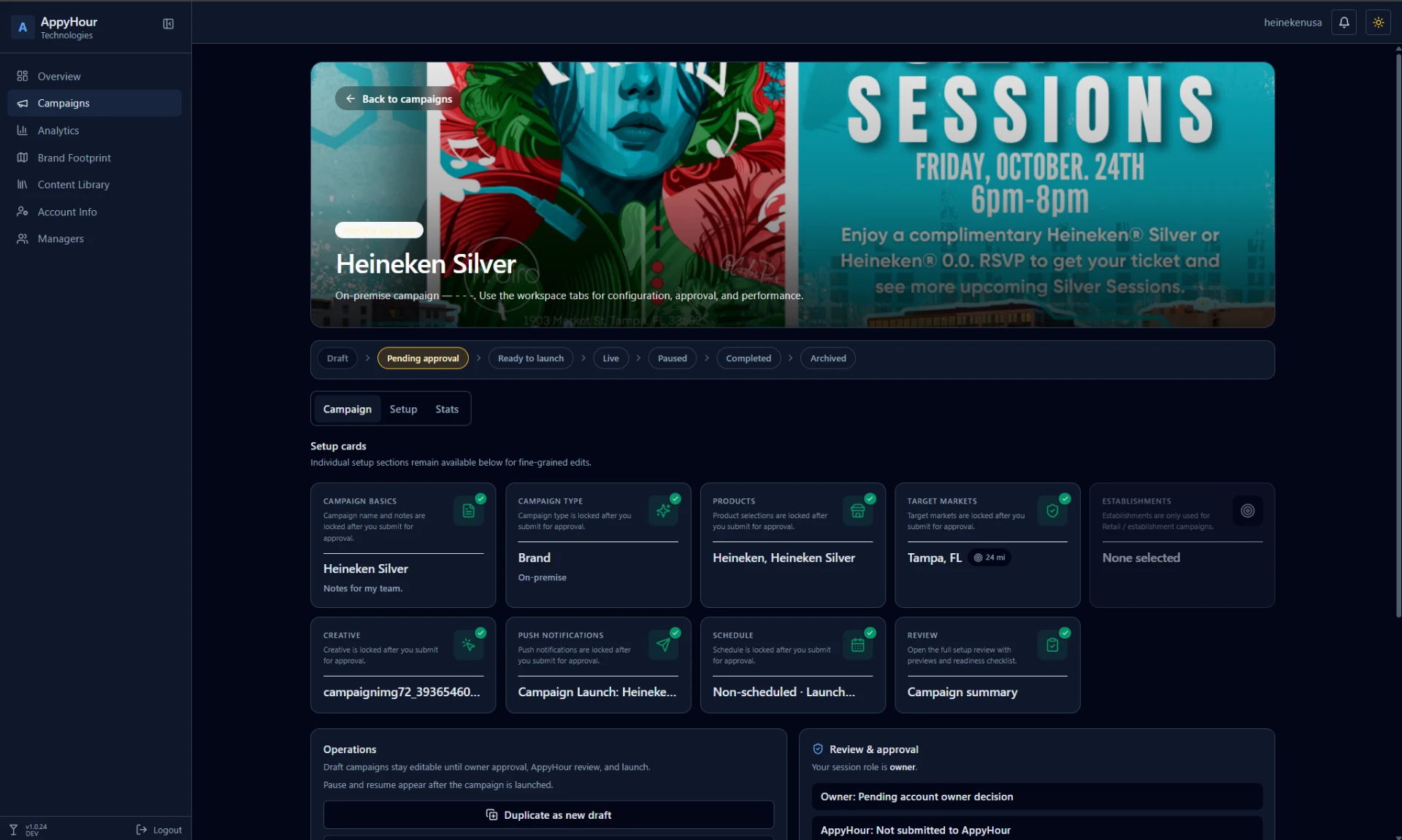
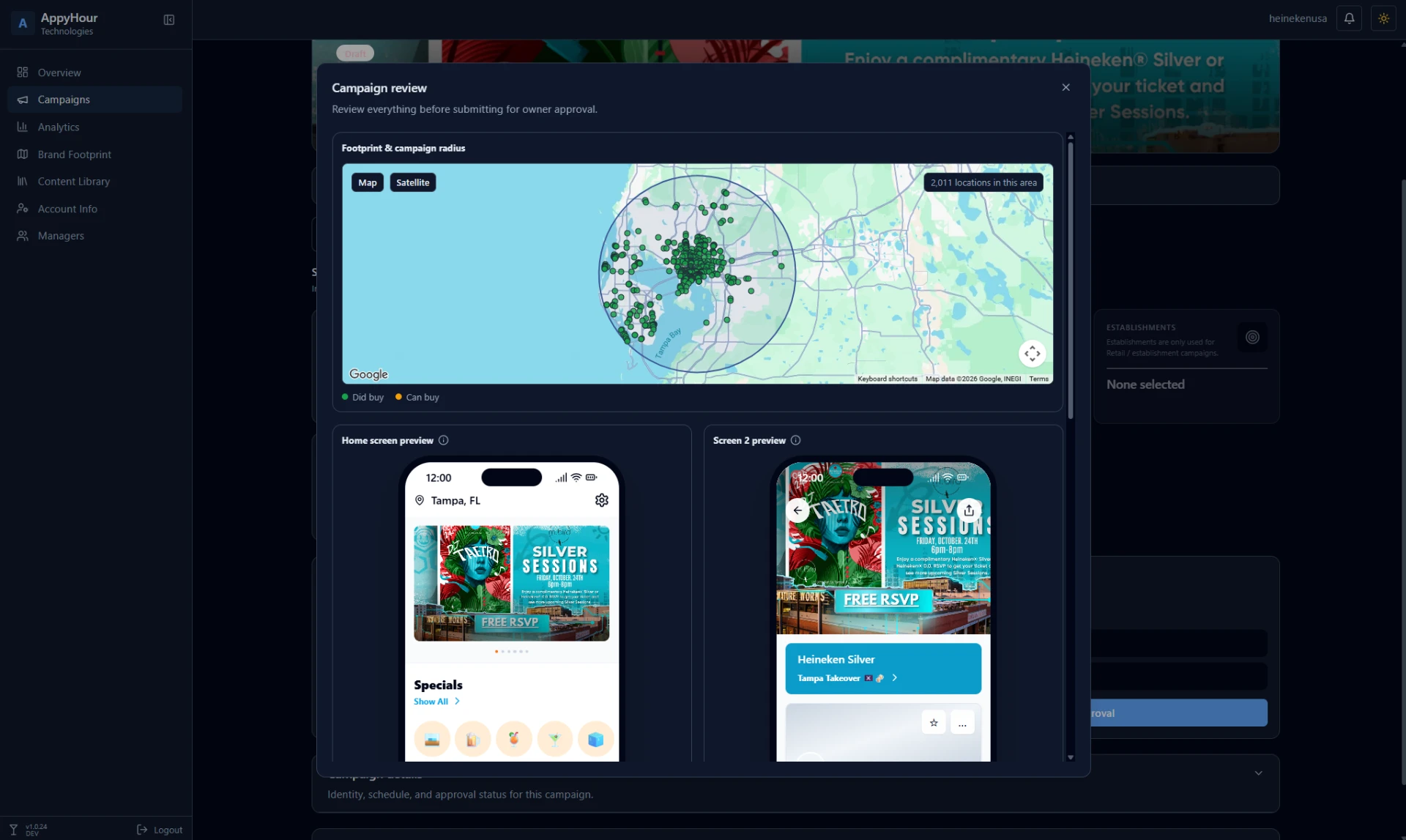
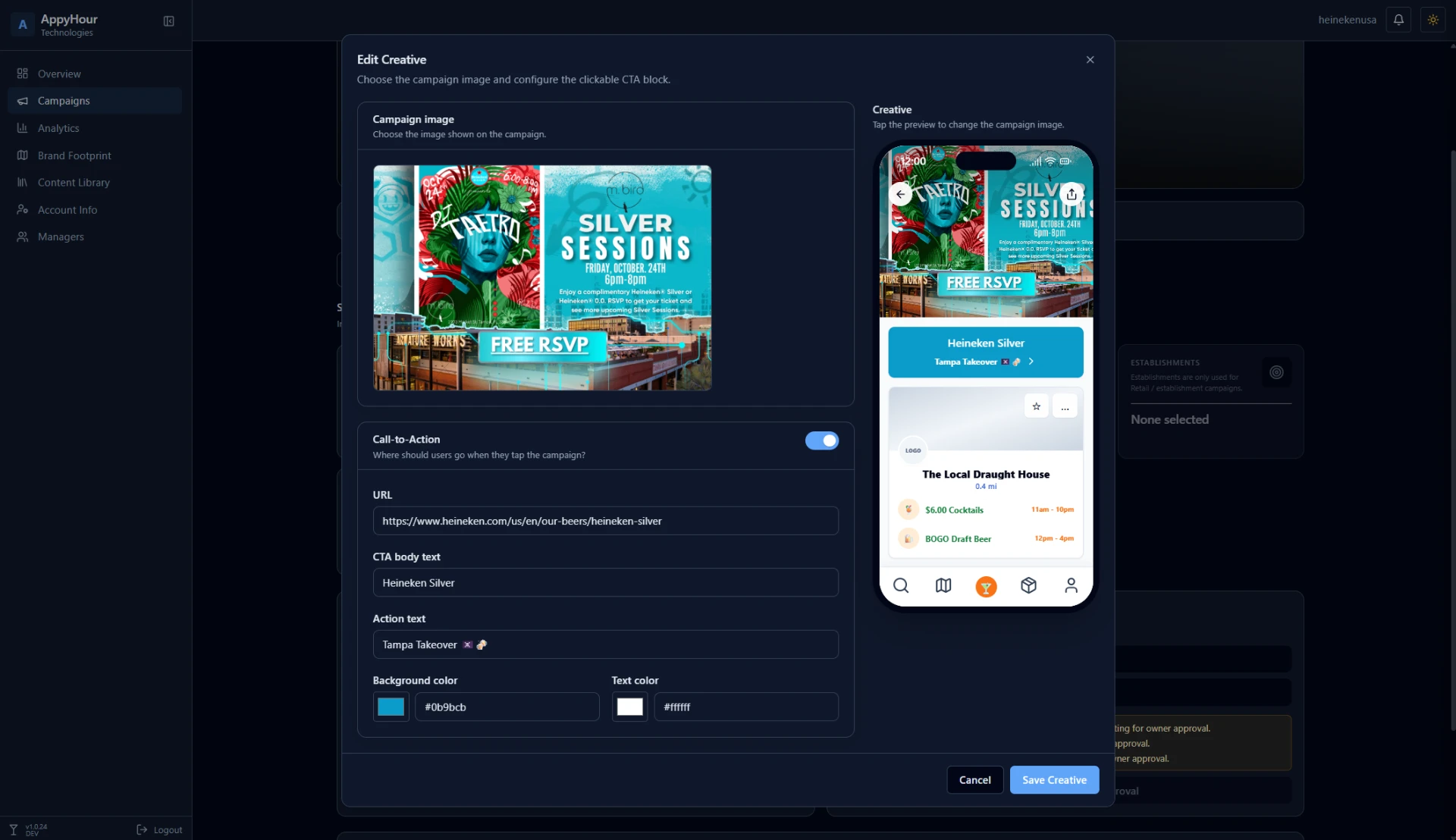
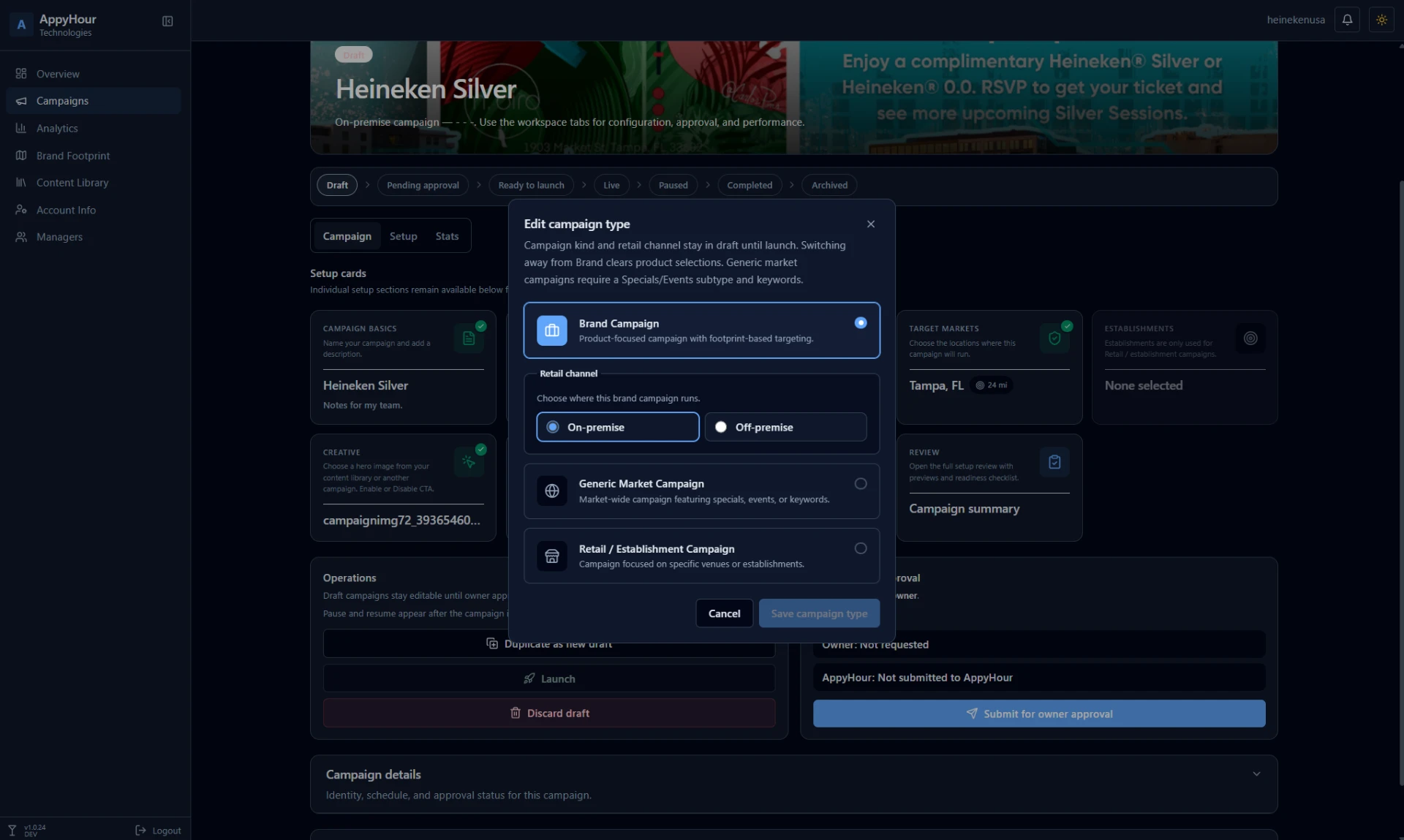
05 / Outcome
What changed
A brittle collection of workflows became a maintainable product system with clearer journeys and a disciplined technical foundation.
Caching, selective loading, and controlled calculation work kept data-heavy interactions smooth.
Let's discover what's possible.
Every business has hidden opportunities.
Some require better decisions. Some require automation. Some require entirely new software.
Let's find yours.